Choking hazards
Choking Hazard Prevention in Restaurants and Public Places
Published
3 years agoon
As the saying goes, ‘an ounce of prevention is worth a pound of cure.’ This holds particularly true when it comes to choking hazard prevention in restaurants and other public places.
In this article, we will explore the importance of implementing effective measures to safeguard against choking incidents. From training staff on prevention techniques to promoting awareness and education, we will delve into practical strategies for ensuring the freedom and well-being of all individuals in these environments.
Key Takeaways
– Choking incidents are a leading cause of injury and death, especially among children and the elderly.
– Strict safety protocols and prevention programs should be established and enforced to prevent choking hazards in public spaces.
– Comprehensive training and education for staff on choking prevention techniques are essential to empower them to take immediate action in emergencies.
– Clear signage indicating potential choking hazards should be implemented in restaurants and public places, along with interactive choking drills and first aid supplies for immediate response.
Importance of Choking Hazard Prevention
Choking hazard prevention is of utmost importance in ensuring the safety and well-being of individuals in restaurants and public places. According to choking hazard statistics, choking incidents are a leading cause of injury and death, especially among children and the elderly. In fact, it is estimated that over 5,000 people die each year in the United States due to choking-related incidents. These alarming statistics highlight the need for proactive measures to prevent choking hazards in public spaces.
Common choking hazards in restaurants and public places include food items such as grapes, hot dogs, nuts, and hard candies. These items can easily become lodged in the throat, blocking the airway and causing a life-threatening situation. Additionally, small objects like coins, buttons, and pen caps can also pose a choking risk, particularly for young children who tend to put things in their mouths.
To mitigate these risks, it is crucial for restaurant owners and public place managers to establish and enforce strict safety protocols. This includes proper food preparation techniques to minimize the risk of choking, such as cutting food into small, manageable pieces for children and ensuring that all food items are properly cooked and tender.
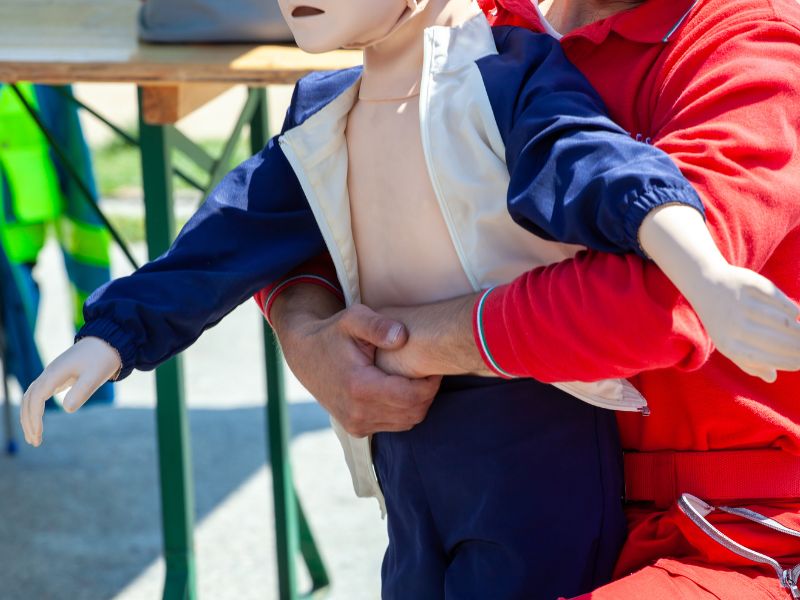
It is essential for staff members to receive comprehensive training on recognizing and responding to choking incidents promptly. This includes knowledge of the Heimlich maneuver and other life-saving techniques that can be administered in emergency situations.
Training Staff on Choking Prevention Techniques
Staff members in restaurants and public places should undergo comprehensive training to familiarize themselves with effective choking prevention techniques. This training is crucial to ensure staff safety and promote a quick and efficient emergency response in case of a choking incident.
To evoke an emotional response in the audience, here are three reasons why training staff on choking prevention techniques is essential:
1. Empowerment: Providing staff with the knowledge and skills to prevent choking incidents empowers them to take immediate action when faced with such emergencies. This sense of empowerment not only enhances staff confidence but also promotes a safer environment for both employees and customers.
2. Lifesaving Potential: Choking can be a life-threatening situation that requires immediate intervention. By training staff on choking prevention techniques, they can recognize the signs of choking and administer appropriate first aid, potentially saving lives before emergency medical services arrive.
3. Customer Satisfaction: Restaurants and public places that prioritize staff training on choking prevention techniques demonstrate their commitment to customer safety and well-being. This commitment enhances customer satisfaction and builds trust, ensuring patrons feel confident and secure when dining or visiting public establishments.
Comprehensive training on choking prevention techniques is an essential component of staff safety and emergency response preparedness. By equipping staff with the necessary skills, establishments can create a safer environment for both their employees and customers.
Implementing Clear Signage for Choking Hazards
To enhance safety measures, restaurants and public places can implement clear signage indicating potential choking hazards. Clear and visible signage can play a crucial role in preventing choking incidents and ensuring the well-being of patrons. These signs should be strategically placed in areas where choking hazards are likely to occur, such as near food preparation stations, buffet areas, or tables where small objects are present.
Signage should include simple and concise messages, using easily understandable symbols and colors. The aim is to grab the attention of individuals and remind them to be cautious of potential choking hazards. Additionally, the signs should provide instructions on what to do in case of a choking emergency, such as encouraging individuals to perform the Heimlich maneuver or seeking immediate assistance from staff.
To ensure effectiveness, it is recommended that staff members are trained in interactive choking drills and Heimlich maneuver techniques. This training will enable them to respond quickly and appropriately in emergency situations. Regular training sessions should be conducted to refresh and reinforce staff knowledge. By equipping employees with the necessary skills and knowledge, restaurants and public places can create a safer environment for their patrons.
Equipping Public Places With First Aid Supplies
In order to provide prompt medical assistance in case of emergencies, public places should be equipped with first aid supplies. Having these supplies readily available can mean the difference between life and death in critical situations. Here are three reasons why equipping public places with first aid supplies is essential:
1. Immediate Response: With first aid supplies on hand, trained individuals can quickly respond to accidents or injuries. They can administer basic medical care such as cleaning wounds, applying bandages, or stabilizing fractures before professional help arrives. This immediate response can significantly improve the chances of a positive outcome for the injured person.
2. Increased Safety: By having first aid supplies easily accessible, public places create a safer environment for everyone. Whether it’s a restaurant, park, or shopping mall, accidents can happen at any time. Having the necessary supplies allows bystanders to provide immediate assistance and potentially prevent a situation from worsening.
3. Support for First Aid Training and Emergency Response Plans: Equipping public places with first aid supplies encourages organizations to prioritize first aid training for their staff members. This training ensures that individuals are prepared to handle emergencies effectively. Additionally, having first aid supplies in place aligns with the implementation of comprehensive emergency response plans, further enhancing the safety and well-being of the public.
Promoting Awareness and Education on Choking Prevention
A comprehensive approach to promoting awareness and education on choking prevention is crucial for effectively addressing this potentially life-threatening hazard in public places. Awareness campaigns play a vital role in educating the public about the risks of choking and the importance of immediate action. These campaigns can include informative posters, brochures, and online resources that highlight common choking hazards and provide guidance on how to prevent and respond to choking incidents.
One of the key techniques that needs to be emphasized in these awareness campaigns is the Heimlich maneuver. This maneuver, also known as abdominal thrusts, is a first-aid procedure used to dislodge an object blocking the airway of a choking person. By teaching individuals how to perform the Heimlich maneuver correctly, awareness campaigns can empower people to take immediate action and potentially save lives in choking emergencies.
Educational programs can be implemented in schools, workplaces, and community centers to provide in-depth training on choking prevention and response. These programs can include practical demonstrations, hands-on practice, and scenario-based training to ensure that individuals are prepared to respond effectively in real-life situations.
Frequently Asked Questions (FAQs)
What Are the Consequences of Not Implementing Choking Hazard Prevention Measures in Restaurants and Public Places?
The consequences of not implementing choking hazard prevention measures in restaurants and public places can include compromised public safety and increased liability risks. It is crucial to prioritize the implementation of these measures to ensure a safe environment for all.
How Often Should Staff Be Trained on Choking Prevention Techniques?
Staff should be regularly trained on choking prevention techniques to ensure the safety of customers and minimize potential choking hazards. Training frequency should be determined based on industry standards and the specific needs of the establishment.
Are There Any Legal Requirements for Clear Signage Regarding Choking Hazards in Public Places?
Legal requirements for clear signage regarding choking hazards in public places may vary depending on the jurisdiction. These requirements aim to ensure the safety of individuals by providing informative and visible signage that helps prevent choking incidents.
What Are Some Essential First Aid Supplies That Should Be Available in Public Places to Respond to Choking Incidents?
Essential first aid supplies for choking incidents in public places include choking relief devices, such as back slaps and abdominal thrusts, as well as CPR masks, gloves, and AEDs. Emergency response training equips individuals to effectively respond to these situations.
How Can Individuals and Communities Participate in Promoting Awareness and Education on Choking Prevention?
Individuals and communities can play a vital role in promoting awareness and education on choking prevention through various promotion strategies. By actively engaging with the community and sharing practical information, we can empower people to take preventive measures and respond effectively in choking incidents.
Conclusion
In conclusion, choking hazard prevention is crucial in ensuring the safety of individuals in restaurants and public places.
By training staff on choking prevention techniques, implementing clear signage for choking hazards, equipping public places with first aid supplies, and promoting awareness and education on choking prevention, the risk of choking incidents can be significantly reduced.
Let’s strive to create an environment where choking hazards are as rare as finding a unicorn in a sea of jellybeans.
You may like
Choking hazards
How First Aid Helps When Choking Hazards Catch You Off Guard
Published
2 days agoon
August 26, 2026
When choking hazards catch us off guard, first aid knowledge becomes our fastest defense. A blocked airway causes brain damage within four to six minutes, so we can’t afford hesitation. Recognizing the universal choking sign, delivering five firm back blows, and executing abdominal thrusts can clear an obstruction before it turns fatal. Training builds the muscle memory we need to act decisively under pressure. Keep going to discover exactly how these techniques work when every second counts.
Why Choking Escalates So Fast
When the airway becomes fully blocked, the body’s oxygen reserves deplete within minutes, making choking one of the fastest-escalating medical emergencies we encounter. Brain damage begins within four to six minutes of complete obstruction, leaving virtually no margin for delayed response.
The primary causes of choking include improperly chewed food, small objects, and compromised swallowing reflexes in children and elderly individuals. Each cause demands specific prevention strategies: cutting food into smaller pieces, supervising young children around small objects, and recognizing high-risk populations before emergencies develop.
We must understand that partial obstructions can rapidly progress to complete blockages. Recognizing early warning signs—forceful coughing, high-pitched breathing, or the universal choking gesture—allows us to intervene before irreversible physiological damage occurs.
How to Spot a Choking Emergency Immediately
Recognizing a choking emergency hinges on distinguishing forceful, productive coughing from the silent or weakening cough that signals a complete obstruction. We must assess choking signs rapidly, as deterioration occurs within minutes.
| Indicator | Partial Obstruction | Complete Obstruction |
|---|---|---|
| Cough strength | Forceful, audible | Weak or absent |
| Speech ability | Possible | Impossible |
| Skin color | Normal | Cyanotic |
| Air movement | Detectable | None |
| Emergency response | Monitor closely | Intervene immediately |
When someone clutches their throat—the universal choking sign—we activate emergency response without hesitation. Silent victims who can’t speak, cough, or breathe require immediate back blows and abdominal thrusts. We never wait for confirmation when cyanosis or unconsciousness appears imminent.
First Aid Techniques That Clear a Blocked Airway
Once we confirm a complete airway obstruction, everything hinges on executing the correct sequence without delay. Position yourself behind the victim, deliver five firm back blows between the shoulder blades, then shift immediately to the Heimlich maneuver. For abdominal thrusts, place your fist thumb-side against the abdomen, just above the navel, grip it with your other hand, and drive inward and upward sharply. Alternate five back blows with five abdominal thrusts until the obstruction clears or the victim loses consciousness. For infants, we substitute back blows with chest thrusts—never abdominal thrusts. If the victim becomes unresponsive, lower them carefully, call emergency services, and begin CPR. Each cycle must be deliberate, forceful, and immediate. Hesitation worsens outcomes.
How First Aid Training Prepares You for Sudden Choking Hazards
Knowing the steps is only half the equation—executing them under pressure is where training makes the difference. First aid training builds muscle memory, so when a choking emergency strikes, we don’t freeze—we act. Courses simulate real scenarios, drilling abdominal thrusts and back blows until the sequence becomes automatic. That repetition is the backbone of effective emergency response.
Training also sharpens our ability to assess severity instantly—distinguishing a partial obstruction from a complete blockage determines which intervention we deploy first. Beyond technique, we learn choking prevention strategies: identifying high-risk individuals, modifying food textures, and positioning vulnerable people correctly during meals.
Certification keeps our skills current. Techniques evolve, and refresher courses guarantee we’re applying evidence-based protocols when seconds define outcomes.
Common Choking Hazards You Need to Know About
Several categories of choking hazards consistently appear across emergency reports, and we need to identify them before an incident occurs. Food choices represent the leading cause, with grapes, nuts, hard candies, and large meat portions topping the list. We must cut these items appropriately and supervise consumption.
Beyond food, small objects demand equal vigilance for child safety—coins, button batteries, toy components, and latex balloons cause preventable fatalities annually. We should conduct regular environmental sweeps, particularly in spaces children occupy.
Adults aren’t exempt. Dental appliances, large pharmaceutical tablets, and improperly chewed food present consistent adult risks. Medical conditions affecting swallowing compound these dangers greatly.
Categorizing hazards systematically allows us to implement targeted prevention protocols rather than reactive measures, strengthening our overall emergency preparedness framework.
Frequently Asked Questions
Can Choking First Aid Techniques Be Safely Performed on Pregnant Women?
Yes, we can perform modified abdominal thrusts on pregnant women, replacing standard compressions with chest thrusts to guarantee pregnant safety. Avoid high risk foods, and always position hands above the uterus.
Should You Call Emergency Services Before or During First Aid?
Racing against death’s clock, we urge you to call emergency services while performing first aid. Emergency response timing demands we never pause intervention—prioritizing victim safety means simultaneous action: dial, then treat, without hesitation.
Are There First Aid Differences for Choking Victims With Disabilities?
Yes, we must adapt our techniques for individuals with disabilities. We’ll modify positioning, force, and adaptive techniques based on mobility limitations. We also address communication needs, ensuring we comprehend the victim’s signals before and during intervention.
How Long After Choking Should a Victim Seek Medical Evaluation?
Even after successful choking recovery, we recommend you seek medical evaluation immediately. Any choking incident risks medical complications, including airway inflammation or undetected aspiration. Don’t assume you’re safe—let a clinician confirm your airway’s fully clear.
Can You Legally Be Held Liable for Performing First Aid Incorrectly?
Good Samaritan laws shield us from liability when we act in good faith, respond with reasonable care, and provide Legal Protection to those who intervene voluntarily during emergencies without expecting compensation.
Conclusion
We can’t predict when a choking emergency will strike, but we can control how prepared we are when it does. Recognizing warning signs, mastering airway-clearing techniques, and understanding common hazards transform panic into purposeful action. First aid training is our armor against life’s most unexpected moments. Don’t wait for an emergency to expose your gaps in knowledge—act now, train deliberately, and position yourself to save a life when seconds matter most.
Choking hazards
Choking Hazards First Aid: What to Do in Those Scary Seconds
Published
4 days agoon
August 24, 2026
When someone’s choking, we must act within seconds. First, confirm complete airway obstruction—they can’t speak, cough, or breathe. For adults, we deliver firm inward-and-upward abdominal thrusts just above the navel. For infants under one year, we alternate five back blows with five chest thrusts instead. If the victim loses consciousness, we begin CPR immediately and visually inspect the mouth before each rescue breath. There’s much more we can do to stay prepared.
How to Tell If Someone Is Really Choking
Recognizing a true choking emergency is critical, as a mistaken response wastes precious seconds. We differentiate complete airway obstruction from partial by evaluating key signs choking presents: inability to speak, cry, or cough forcefully, cyanosis around the lips, and a universal distress signal—hands clutching the throat. Recognizing distress early determines intervention speed.
A conscious victim with a partial obstruction can still move air and produce a weak, high-pitched cough; we encourage continued coughing and monitor closely. However, when the airway is completely blocked, the victim produces no sound, no effective cough, and deteriorates rapidly toward unconsciousness. Silent choking demands immediate action. We never perform blind finger sweeps or delay intervention waiting for confirmation—visible distress plus absent airflow is sufficient evidence.
The Heimlich Maneuver, Step by Step
Once we’ve confirmed complete airway obstruction, we move immediately into the Heimlich maneuver—a sequence of abdominal thrusts designed to generate rapid diaphragmatic pressure sufficient to dislodge a foreign body. Position yourself behind the victim, feet staggered for stability. Place one fist, thumb-side in, just above the navel and below the xiphoid process. Grip that fist with your other hand, then deliver firm, inward-and-upward thrusts until the object clears or the victim loses consciousness. Heimlich variations apply for pregnant or obese individuals—substitute chest thrusts at the lower sternum. If the victim becomes unresponsive, lower them carefully, begin CPR, and check the mouth before each rescue breath cycle. Rescue breathing remains secondary until the obstruction is fully resolved.
Choking First Aid for Infants and Young Children
Infants and young children demand a modified approach—their airways are narrower, their anatomy less forgiving, and the Heimlich maneuver is contraindicated in infants under one year. For infants, we alternate five back blows with five chest thrusts, never performing abdominal compressions. Support the infant airway by keeping the head lower than the chest during back blows, facilitating gravity-assisted clearance. For children aged one and older, use abdominal thrusts scaled to their smaller frame—gentler force, same upward trajectory. If the child loses consciousness, initiate CPR immediately and look inside the mouth before delivering breaths; remove visible objects only. Effective emergency response requires practicing these techniques before crisis strikes—hesitation costs seconds you don’t have.
What to Do When the Person Is Alone or Unconscious
Beyond adapting technique for age and size, we must also prepare for scenarios where no bystander is present or where the victim has lost consciousness—circumstances that demand a different, self-directed or modified response.
Self rescue techniques and unconscious choking procedures require disciplined execution:
- Self-Heimlich: Drive your own fist sharply inward and upward below your sternum, or thrust your upper abdomen forcefully against a hard chair back or countertop edge.
- Unconscious victim: Lower them carefully to the ground, call emergency services immediately, then begin CPR—chest compressions may expel the obstruction.
- Airway reassessment: Before each rescue breath, visually inspect the mouth for a visible object; never perform blind finger sweeps.
Mastering these protocols guarantees effective response when ideal conditions don’t exist.
Common Choking Hazards You Can Remove From Your Home Today
Small objects scattered throughout the average home represent the most preventable category of choking risk, particularly for children under four and older adults with swallowing difficulties. Choking prevention begins with systematic household audits. We recommend addressing these documented hazards immediately:
Household Items & Small Objects: Coins, button batteries, bottle caps, and jewelry require secured storage above 4 feet.
Toys Safety: Remove toys with components smaller than 1.75 inches in diameter from accessible areas.
Kitchen Hazards: Grapes, cherry tomatoes, nuts, and hard candies top food choices requiring modification—quarter or eliminate them entirely.
Additional Priorities: Latex balloons, pen caps, and medication tablets demand locked containment.
Document removed hazards systematically. Environmental modification combined with intentional food choices constitutes our strongest evidence-based choking prevention strategy before emergencies occur.
Frequently Asked Questions
Can Choking First Aid Techniques Differ for Pregnant Women?
Yes, we must modify techniques for pregnancy considerations. Instead of abdominal thrusts, we perform chest thrusts to address unique choking risks. Position hands on the lower sternum, delivering firm, controlled compressions until the obstruction clears.
Is It Safe to Perform the Heimlich Maneuver on Yourself?
Yes, you can perform the Heimlich Technique on yourself through Self Rescue. Make a fist above your navel, thrust inward and upward, or drive your abdomen forcefully against a hard edge, like a chair back.
When Should Bystanders Call Emergency Services During a Choking Incident?
When someone’s “in distress,” we must call emergency services immediately if conscious interventions fail after five back blows and abdominal thrusts. Persistent choking signs—cyanosis, loss of consciousness, or ineffective coughing—demand we activate emergency medical services without delay.
Can Improper Choking First Aid Cause Internal Injuries to the Victim?
Yes, improper first aid techniques can cause internal injuries. When we misapply abdominal thrusts by targeting the wrong location or using excessive force, we risk damaging organs involved in the choking mechanism, including the liver and spleen.
Are There Legal Risks Involved When Performing Choking First Aid on Strangers?
Like Good Samaritan laws serving as shields in legal battles, we’re protected when acting in good faith. Legal protections minimize consent issues, letting us intervene decisively—evidence confirms most jurisdictions safeguard bystanders performing emergency choking first aid on strangers.
Conclusion
We can’t overstate how critical these skills are: according to the American Red Cross, choking is the fourth leading cause of unintentional injury death in the United States. Knowing the Heimlich maneuver, recognizing true airway obstruction, and eliminating household hazards aren’t optional precautions—they’re evidence-based interventions that directly improve survival outcomes. We urge everyone to practice these techniques before an emergency strikes, because in those frightening seconds, preparedness is the only thing that matters.
Choking hazards
From Grapes to Toys: First Aid Choking Hazards Explained
Published
1 week agoon
August 21, 2026
Choking kills hundreds of children annually, and the biggest threats are often everyday foods like grapes, hot dogs, and nuts. These items share dangerous physical properties—spherical shapes, compressible textures, or unpredictable fragmentation—that can completely block a small child’s airway. Recognizing the signs quickly and responding with back blows and chest thrusts can save a life. We’ll walk you through everything you need to know to protect your child.
The Foods Most Likely to Choke Young Children
Certain foods pose a disproportionate choking risk to young children due to their size, shape, texture, or consistency. We identify six primary offenders supported by pediatric research. Grape dangers stem from their spherical shape, which perfectly occludes a child’s airway. Hot dog threats are similarly serious, as cylindrical pieces conform to tracheal anatomy. Nut risks arise from their hardness and tendency to fragment unpredictably. Popcorn hazards involve both kernel size and irregular shapes that resist controlled swallowing. Carrot concerns center on their firm density, which small mouths struggle to adequately masticate. Candy choking incidents frequently involve hard, disc-shaped pieces that become slippery when wet. We recommend eliminating or modifying these foods for children under four through cutting, cooking, or supervised substitution.
Why Small Objects Are More Dangerous Than They Look
Although small objects may appear harmless at a glance, their true danger lies in a precise anatomical mismatch: a child’s trachea measures roughly 8–10 mm in diameter, meaning any object approaching that width can achieve near-complete airway occlusion. These hidden choking dangers compound because smooth, compressible items—balloons, grapes, coin-sized batteries—conform to airway contours, resisting natural expulsion reflexes. Small object risks aren’t limited to obvious toys; button batteries introduce chemical burns alongside mechanical obstruction, escalating injury severity within hours. We must also recognize that partial occlusions allow enough airflow to suppress a visible distress response, delaying caregiver recognition. Evidence consistently shows that size alone doesn’t predict lethality—shape, compressibility, and surface texture each independently elevate risk, demanding vigilance beyond simple diameter-based assessments.
How to Tell If Your Child Is Choking?
Recognizing a choking episode quickly is where knowing the hazard profile ends and acting on it begins. Parental awareness of choking signs determines whether intervention happens within seconds or minutes — a distinction that’s clinically significant. A choking child typically displays one or more of the following: high-pitched stridor or complete absence of sound, ineffective or absent cough, cyanosis around the lips or fingertips, panicked facial expression, and hands clutching the throat. Partial obstructions allow some airflow; complete obstructions don’t. If your child can cry, cough forcefully, or speak, don’t intervene aggressively — monitor closely instead. If they can’t, act immediately. We must distinguish between gagging and true obstruction, because misidentifying choking signs delays the correct response and worsens outcomes.
Step-by-Step First Aid for a Choking Child
Once we’ve confirmed a child can’t cough effectively, cry, or speak, every second dictates outcome, and we must move through a clear, sequenced response. Position the child face-down across your forearm, head lower than the chest. Deliver five firm back blows between the shoulder blades using the heel of your hand. Immediately follow with five chest thrusts using two fingers centered on the sternum. Alternate these cycles until the object dislodges or emergency response services arrive. Never perform abdominal thrusts on infants under one year. For children over one, apply upward abdominal thrusts instead of chest thrusts. Consistent choking prevention practices reduce intervention frequency, but when obstruction occurs, executing this sequence without hesitation determines survival. Always seek medical evaluation afterward, even if the obstruction clears successfully.
Simple Changes That Prevent Choking Before It Starts
Most choking incidents in children are preventable through deliberate, straightforward environmental and behavioral modifications. We’ve identified key preventive measures that substantially reduce risk. Cut grapes, cherry tomatoes, and hot dogs lengthwise and into quarters. Enforce seated, supervised safe eating—running or playing while eating considerably increases aspiration risk. Avoid offering hard candies, whole nuts, or raw carrots to children under four. We should routinely audit play environments, removing toys with components smaller than 1.75 inches in diameter. Store small household items—batteries, coins, magnets—in secured, inaccessible locations. Position infants correctly during feeding and delay introducing solid foods until developmental readiness is confirmed. These targeted preventive measures address the primary vectors through which pediatric choking incidents occur.
Frequently Asked Questions
At What Age Does Choking Risk Significantly Decrease for Children?
Choking risk markedly decreases around age four. We recommend maintaining strict choking prevention and toddler safety protocols until children develop adequate chewing mechanics, airway diameter, and swallowing coordination, typically solidified between ages four and five.
Can a Child Choke Silently Without Any Visible Distress Signs?
Yes, silent choking occurs when a complete airway obstruction prevents vocalization. We must recognize warning signs beyond crying: wide eyes, hands clutching throat, panicked expression, and cyanosis, as distressed silence demands our immediate intervention.
Should Children With Swallowing Disorders Follow Different Choking Prevention Rules?
Yes, they absolutely must. Unlike typical children, those with swallowing difficulties need individualized prevention strategies, carefully modified safe foods, and specialized medical advice—standard choking guidelines we’d normally recommend simply aren’t sufficient for their unique physiological needs.
How Do Childcare Facilities Legally Handle Choking Emergencies Differently Than Parents?
Childcare facilities must maintain documented choking policies, conduct mandatory emergency training for all staff, and follow state-regulated response protocols. Unlike parents, they’re legally required to demonstrate compliance through inspections, incident reporting, and staff certification renewals.
Does a Previous Choking Incident Increase a Child’s Future Choking Risk?
Like ancient scrolls warn us, heed history’s lessons: yes, previous incidents can increase risk. We’ve seen long-term effects include heightened airway sensitivity and behavioral anxiety around eating, demanding vigilant, ongoing monitoring.
Conclusion
We’ve covered the terrain from grapes to toy parts, but the numbers demand our attention: choking is the fourth leading cause of unintentional injury death in the United States, with children under five representing the most vulnerable group. That statistic isn’t abstract—it’s preventable. When we apply evidence-based first aid techniques consistently and modify our child’s environment proactively, we’re not just following guidelines. We’re directly reducing a measurable, documented risk.
How First Aid Helps When Choking Hazards Catch You Off Guard
Choking Hazards First Aid: What to Do in Those Scary Seconds
From Grapes to Toys: First Aid Choking Hazards Explained
Concussion Protocols in Contact Sports: Ensuring Athlete Safety and Staying Ahead of Innovations
Understanding the Warning Signs: Recognizing the Early Symptoms of Stroke
Emergency First Aid: Treating Dehydration on the Spot
Trending
-
First aid3 years agoConcussion Protocols in Contact Sports: Ensuring Athlete Safety and Staying Ahead of Innovations
-
stroke victims3 years agoUnderstanding the Warning Signs: Recognizing the Early Symptoms of Stroke
-
First aid3 years agoEmergency First Aid: Treating Dehydration on the Spot
-
CPR techniques3 years agoChoking Hazards: What To Do When Someone Can’t Breathe
-
First aid3 years agoReturn to Play Guidelines for Children with Minor Head Injuries
-
First aid3 years agoInside the Bathroom Battle: Recognizing Diarrhea’s Warning Signs
-
Choking hazards3 years agoThe ABCs of First Aid: Airway, Breathing, Circulation
-
First aid3 years agoFirst Aid for Cuts and Wounds: Cleaning, Dressing, and Infection Prevention